
[Video] Why does heat get harder as we age?

Summer heat can affect older adults differently. As we age, the natural cooling systems our bodies rely on become less efficient, making us more susceptible to heat-related illnesses like heat exhaustion and heat stroke. In the video, bottom of page, family physician Dr. Erin Gallagher explains what heat exhaustion and heat stroke are and what you can do to lower your risk. Read on to learn more about special considerations and prevention advice specific to older adults and for those on certain medications.
Why heat affects older adults differently
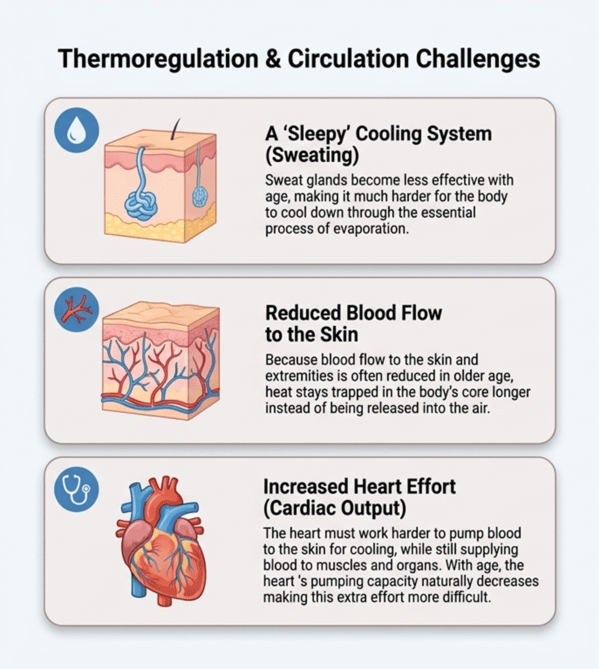
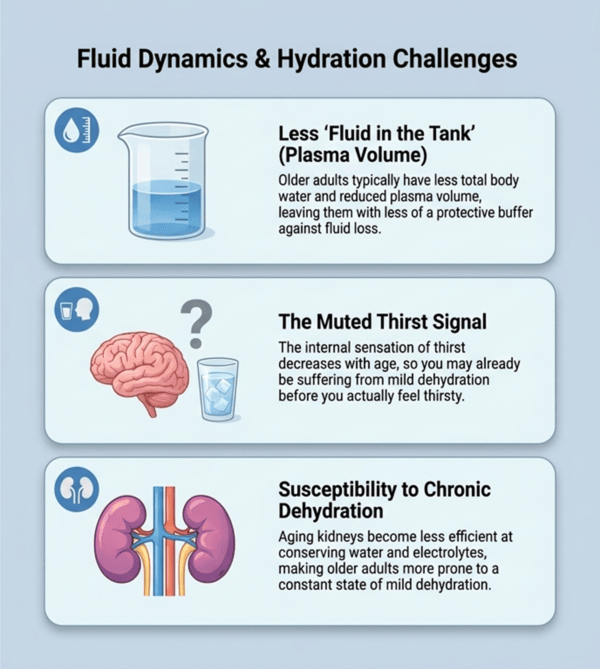
The body relies on several systems to stay cool during hot weather. Aging can affect both thermoregulation (how the body cools itself) and circulation, as well as fluid balance and hydration, increasing the risk of heat-related illness. The infographic below highlights six common age-related changes that affect how the body responds to heat.
Is your medication making you sensitive to heat?
Many common medications can interfere with how your body regulates temperature or maintains fluid balance. If you take any of the following medications, talk to your doctor, nurse practitioner, or pharmacist about your risk of heat-related illness and follow their advice during hot weather.
Type of Medication Why It Increased Your Risk Heart & Blood Pressure (e.g., Beta-blockers) Can make it harder for your heart to pump warm blood to the skin for cooling. Diuretics ("Water Pills") Help your body eliminate salt and water, which can lead to dehydration or salt imbalances in the heat. Antidepressants & Anti-anxiety Some can prevent you from sweating or change how your brain’s "thermostat" reacts to heat. Allergy & Cold Relief (Antihistamines/Decongestants) Can stop sweating or prevent blood vessels in your skin from dilating to release heat. Parkinson Disease Many treatments for this disease can directly inhibit your ability to sweat. Memory & Alzheimer Disease Some treatments cause side effects like diarrhea or vomiting, which can lead to rapid dehydration. Antipsychotics Can prevent sweating and, in some cases, cause your body temperature to rise on its own.
Beat the heat: A guide to summer safety
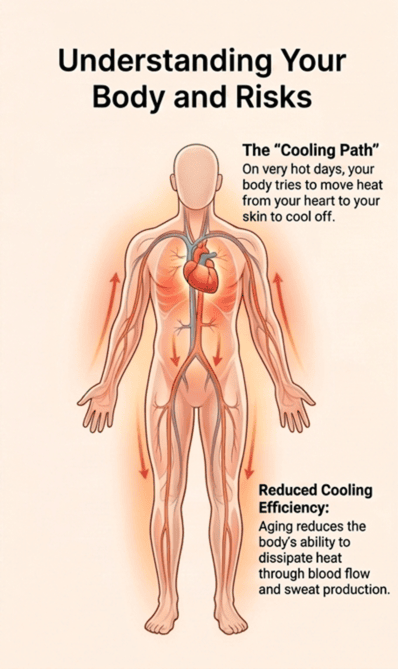
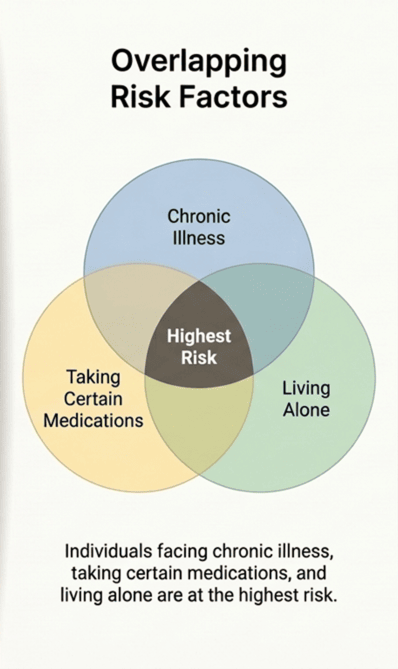
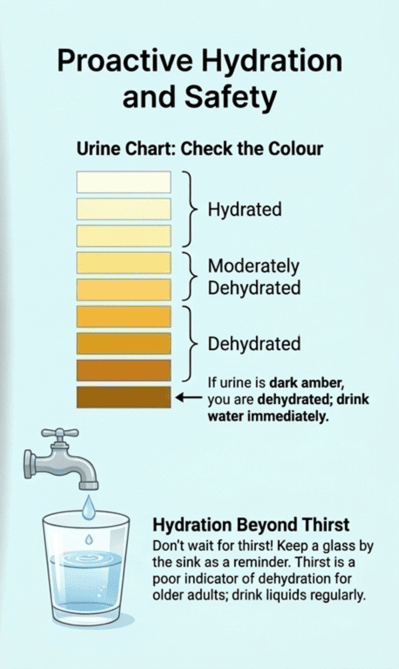
Staying safe in hot weather starts with understanding your personal risk factors and taking simple steps to stay cool and hydrated. The infographic below highlights practical ways older adults can reduce their risk of heat-related illness.
Key takeaway
Aging, chronic illness, certain medications, and dehydration can all increase the risk of heat-related illness. Staying hydrated, keeping cool, and checking in with health professionals about medication risks can help you stay safer during hot weather.
Heat Stroke vs. Heat Exhaustion: Know the Signs and Symptoms
-
By
McMaster Optimal Aging Portal
-
Published
May 22, 2026
-
Subject Area
- Emergency Preparedness & Climate Events
- Health & Wellness - General
-
Category
Newsletter
Sign up for the Healthy Aging CORE BC newsletter to keep up-to-date with activity from the platform and the Community-Based Seniors Services (CBSS) sector across BC and Canada.